Labels
Shipping labels, floor tape and color codes: a warehouse guide
A warehouse runs on signs: labels that tell a carrier how to treat a box, labels that tell staff whether a carton is on hold, colors that mark the oldest stock and tape that marks where forklifts go. Here is how to use each kind well, with examples from the 85 Tape Logic handling labels and the rest of the label range.
What a handling label is for
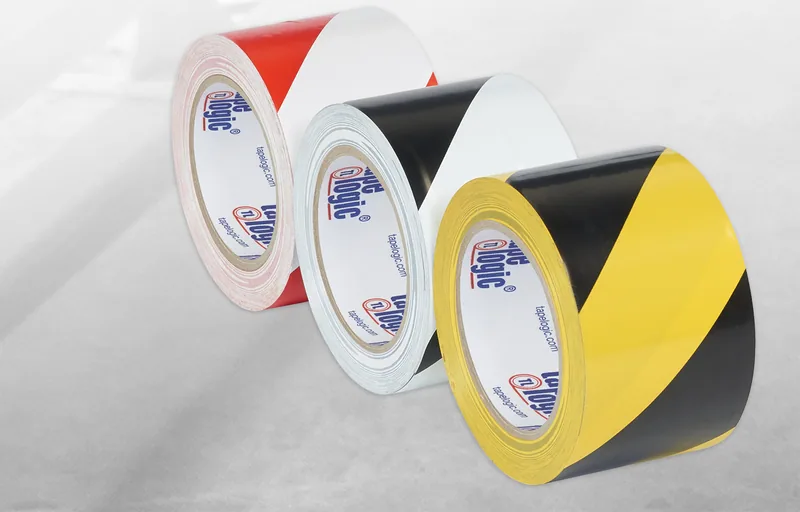
A handling label is an instruction for people who will never meet you: the driver, the sorter, the person unloading a trailer at two in the morning. It has to be read in a second, often from a few feet away, and it has to say one thing. That is why the best handling labels are bold, bright and short: Fragile, This Side Up, Do Not Stack.
Labels do not replace good packing. A Fragile label asks people to slow down, but a parcel still rides on conveyors and in automated sorters where no one reads it. Think of the label as a second layer of protection, after the box and the cushioning, not a substitute for either.
Fluorescent labels exist because they stand out on brown board. Most Tape Logic handling and inventory labels are printed on fluorescent red, green, yellow or orange stock, which reads at a glance against kraft. Red-and-white and black-and-yellow prints carry the most urgent messages, such as Fragile and Static Sensitive.
Choose the fewest labels that say what matters. A box covered in five different stickers is harder to read than a box with one clear Fragile and two arrows. If every box in a run needs the same message, printed tape can carry it on the seam instead.
Fragile, arrows and the common handling messages
Fragile labels are the most familiar. The Tape Logic line covers plain Fragile and more specific versions such as Fragile Glass, Fragile Liquid, Delicate Instruments and Fragile Electronic Equipment, from small 2 x 3 inch labels to 8 x 10 inch labels for big cartons and pallets. A specific message tells the handler why to be careful, which tends to be taken more seriously than a generic one.
Arrow labels answer a different question: which way is up. This End Up and This Side Up labels show two arrows pointing to the top of the box. They matter for liquids, appliances, plants and anything packed with a heavy end. Put them on at least two opposite sides, near the top, so they show whichever way the box is turned.
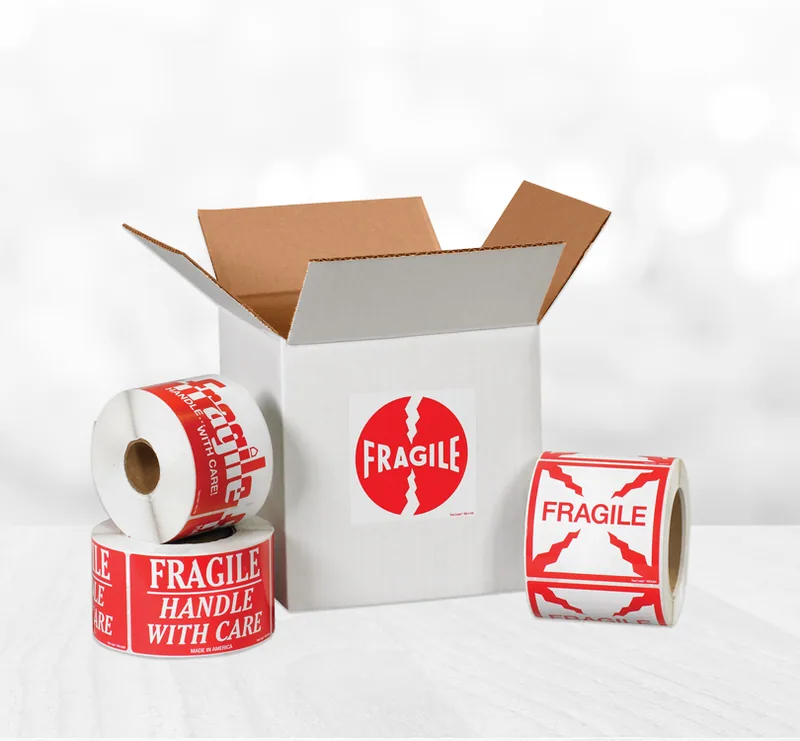
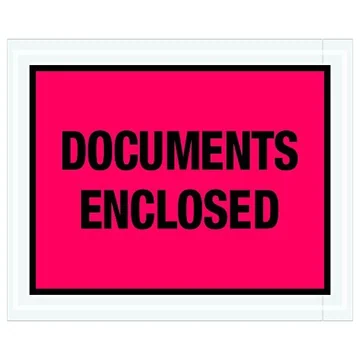
The wider handling range covers stacking, temperature and contents. Do Not Stack, Do Not Double Stack and Top Load Only protect boxes that cannot take weight on top. Keep Frozen, Protect From Freezing and Refrigerate Upon Arrival deal with temperature. Hardware Enclosed, Documents Enclosed and Instructions Enclosed tell the receiver what is inside before they open the box. Electrostatic Sensitive Devices labels mark electronics that need careful handling.
Rush labels move a parcel to the front of the line in a mailroom or receiving dock. The Tape Logic versions include plain Rush, Rush Medical Supplies, Rush Medication Enclosed, Perishable and Perishable Rush. They are internal signals and do not change a carrier's service level, which comes from the carrier's own label.
| Line | Models | Sizes | Example messages | From |
|---|---|---|---|---|
| Fragile Labels | 20 | 5 sizes, 2 × 3" to 8 × 10" | “Delicate Instruments”, “Fragile Glass Handle with Care”, “Fragile Liquid Handle with Care” | $21.69 |
| Arrow & This Side Up Labels | 4 | 3 sizes, 2 × 3" to 4 × 8" | “This End Up”, “Caution This Side Up” | $18.65 |
| Shipping & Handling Labels | 85 | 18 sizes, 1 × 2 1/2" to 8 × 10" | “Radioactive II”, “Electrostatic Sensitive Devices”, “Priority” | $15.59 |
| Rush & Perishable Labels | 7 | 6 sizes, 1 1/2 × 2" to 4 × 6" | “Rush”, “Rush Medication Enclosed”, “Rush Medical Supplies” | $14.62 |
| Inventory & Quality Control Labels | 43 | 8 sizes, 1 1/4 × 2" to 4 3/4 × 2 3/8" | “Do Not Inventory Date”, “Part Number”, “Inspected” | $13.92 |
| Day & Month Inventory Labels | 7 | – | “DEC”, “Fri”, “Mon” | $6.56 |
| Number Labels | 6 | 2 sizes, 1" to 2" | Blank | $15.99 |
| Color-Coding Dots & Labels | 22 | 4 sizes, 5 × 3" to 10 × 3" | Blank | $7.82 |
| Blank & Removable Labels | 18 | 4 sizes, 1" to 8 × 10" | Blank | $12.05 |
In the catalog


Where labels go on a box
Placement matters as much as the message. The shipping label, with the address and barcode, goes on the largest flat face of the box, away from the tape seam and the edges. The Postal Service asks for all labels to be on the same side, not bent around corners, folded or overlapping, so machines and people can read them.
Handling labels follow different rules because they need to be seen from several directions. Fragile labels work best on the top and on at least one side. Arrow labels go on two or more opposite sides. Stacking labels such as Do Not Stack go on the top where a handler would put the next box. Keep them clear of the shipping label so neither covers the other.
“Place all labels on the same side, and don’t bend, fold, or overlap labels.”
Press labels down firmly, especially the corners. A label with a lifted corner catches on other boxes and peels off in transit. On reused boxes, cover old labels and barcodes first with a block-out label, so there is only one set of instructions on the box.
For pallets, use larger labels. An 8 x 10 inch Fragile label or a 4 x 6 inch Do Not Stack label on each side of a wrapped pallet is easier to see than small labels hidden under stretch film.
Choosing the right label size
Label size is a trade between visibility and space. A label that is too small is missed. A label that is too large covers the shipping label or wraps around an edge, where it peels. A simple rule is to match the label to the face it goes on and the distance it must be read from.
Small labels, around 1 1/4 x 2 and 2 x 3 inches, suit parcels and small cartons read up close: on a packing table, a shelf or a sorting belt. Medium labels, 3 x 5 and 4 x 4 inches, are the everyday size for shipping cartons, read across a dock or a truck. Large labels, 4 x 6 and 8 x 10 inches, are for big cartons and pallets, read from a forklift seat or across a warehouse aisle.
The Tape Logic fragile and handling labels cover that whole range, from small circles and rectangles to 8 x 10 inch labels sold 250 to a roll. Inventory labels come as 1 and 2 inch circles for small bins and as rectangles up to 3 x 5 inches for cartons. Choosing two sizes, one for parcels and one for cartons, covers most needs without a cupboard full of rolls.
Whatever the size, keep a margin around the label so it sits on a flat area of the box. A label that crosses a seam or a fold tears when the box is opened or crushed.
Labels for a small e-commerce packing station
A small online shop needs fewer label types than a warehouse, but it uses them on every order. The core kit is short: address or shipping labels for the printer, a roll of Fragile labels for breakables, packing list envelopes for the slip or invoice, and a few arrow labels for anything that must stay upright.
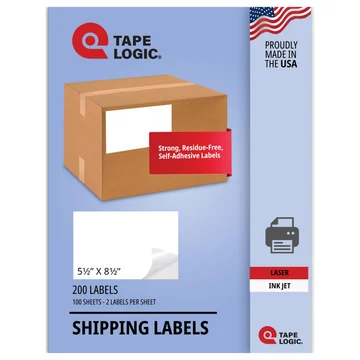
Printed shipping labels come from the carrier's software, on sheet labels for a laser or inkjet printer or on rolls for a thermal printer. Half-sheet labels, two to a letter sheet, are a common format for laser printers, and the Tape Logic laser label range includes layouts from 3 to 80 labels a sheet. A thermal printer becomes worth it once you print more than a few dozen labels a day.
Keep the station in the order you pack: box, item, fill, packing slip in its envelope, tape, shipping label, handling labels. A small label dispenser at arm's length holds the Fragile and arrow rolls so they peel off one-handed. Buyers notice tidy packing, and a consistent order of work cuts mistakes such as a missing slip or a label on the wrong face.
Add rotation and status labels only when stock grows to the point where you cannot see everything at a glance. Until then, simple shelf order does the job.
In the catalog
Special handling: static, temperature and hazards
Some contents need more than Fragile. Electronics can be damaged by static discharge, and Electrostatic Sensitive Devices labels, printed black on yellow, warn handlers to treat the box with care and to open it at a static-safe workstation. The Tape Logic static labels come as small rectangles for component boxes and as 4 x 4 inch labels for cartons.
Temperature labels tell the receiver how to store the contents on arrival. Keep Frozen, Protect From Freezing, Refrigerate Upon Arrival and Freeze Upon Arrival are among the Tape Logic messages, alongside Perishable labels for food and anything with a short life. They are instructions, not insulation: the box still needs the right packaging for the trip.
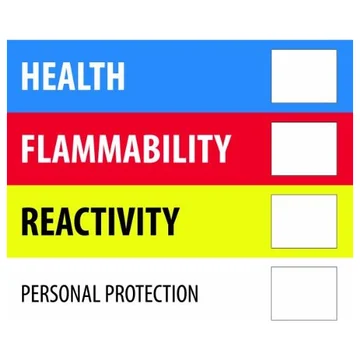
Hazard communication in the workplace is a separate system. The Tape Logic Health, Flammability, Reactivity label leaves a box beside each colored band, health in blue, flammability in red and reactivity in yellow, to be filled in from the product's safety data sheet. It suits secondary containers and cabinets inside a building.
Shipping hazardous materials is regulated, and carriers and federal transport rules decide which labels and markings a package must carry. A stock label such as Radioactive II or a hazard warning does not make a package compliant on its own. Check the carrier's requirements before shipping anything regulated.
In the catalog
Applying labels quickly: rolls and dispensers
Labels on rolls are fast to apply once they come off the roll easily. Most Tape Logic handling and inventory labels come 500 to a roll. The largest 8 x 10 inch labels come 250 to a roll. Peeling labels by hand from a loose roll is slow, which is where a label dispenser earns its place on a packing table.
A label dispenser holds the roll on a spindle and runs the liner over a sharp edge, the peel bar. As you pull the liner, each label lifts off at the edge ready to take. The Tape Logic label dispensers are all-metal, tabletop or wall-mounted, from 8 1/2 to 18 inches wide, and hold rolls up to 7 inches across. The tabletop models can dispense tape as well as labels.
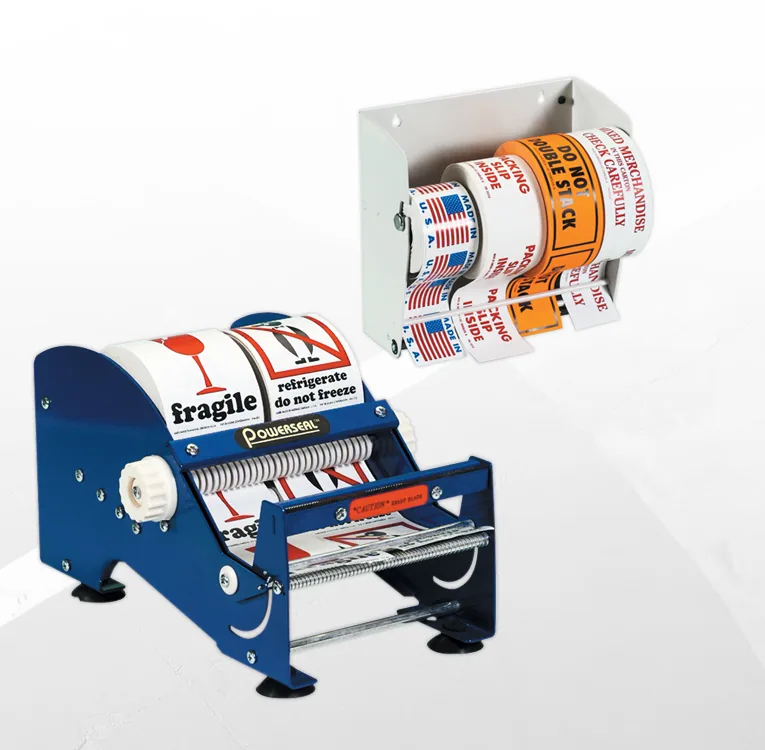
The label product notes name the matching dispenser stock numbers: SL9506, SL9512 and SL9518 for tabletop dispensers and LDM250 to LDM1250 for wall mounts. Those numbers are searchable in the catalog, so a dispenser and its labels are easy to match.
A wide dispenser holds several rolls side by side, which suits a station that uses Fragile, This Side Up and a contents label on most boxes. Load the rolls in the order you apply them and the hand moves left to right without searching.
In the catalog

Running a hold-and-pass system with labels
Inventory and quality control labels make the status of a carton visible without opening a computer. A receiving dock can mark cartons Received, a quality team can mark them Inspected, Approved or Rejected, and anything waiting for a decision gets a Hold or Quality Hold label. Anyone walking past knows what can be shipped and what cannot.
The system only works if the colors and words are consistent. Pick one meaning per color and keep it everywhere: red for stop (Hold, Rejected, Do Not Use), green for go (Approved, Inspected, OK to Ship), yellow or orange for in between (Sample, Tested, Transfer). The Tape Logic QC labels are printed with that kind of color logic in fluorescent red, green, yellow and orange, plus blue for messages such as QC Passed and OK to Ship.
Some labels leave space to write. Inspected By and Rejected By labels have a line for initials or a date, which turns a sticker into a simple record. Counted and Do Not Inventory labels help during a physical stock count, when you need to see at a glance which cartons were already counted.
Labels are not a replacement for a records system in a regulated industry, but in most warehouses they cut the time spent asking where something stands. Keep a small stock of each status label at the place where the decision is made, not in a cupboard across the building.
In the catalog

Day and month labels for stock rotation
First in, first out is easy to say and hard to do when every carton looks the same. Day and month labels make it visual. Each day of the week or month of the year has its own color, so the oldest stock stands out across a room without anyone reading a date.
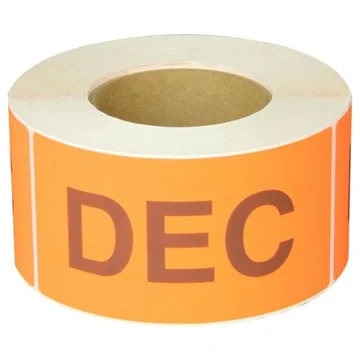
The Tape Logic day labels are 2 inch circles printed with the day, and the month labels are 6 by 3 inch rectangles printed with the month, each 500 to a roll. Mark goods with the day or month they arrived, or the day they should be used by, and pick from the oldest color first.
Rotation labels are common in kitchens and food storage, but they work for any stock with a shelf life or a sequence: adhesives, chemicals, batteries, seasonal goods. The point is not the label itself but the habit it builds: the color that is about to roll round again should never be on the shelf.
Pair rotation labels with a simple rule posted on the shelf, such as the color order for the month, and the system runs itself.
In the catalog

Color dots and blank labels
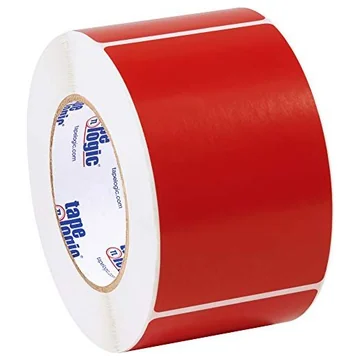
Blank color labels are the flexible end of the range. Small dots and blank rectangles in bright colors can mean anything you decide: a zone, a shift, a supplier, a customer, a picker. Because they carry no printed word, they can be reused for a new code next month.
The Tape Logic color-coding labels include 3/4 inch dots and blank rectangles from 5 x 3 to 10 x 3 inches, in fluorescent and neon reds, oranges, yellows, greens and pinks, plus dark blue, light blue, black and white. Packs run from 250 to 10,800 labels. The rectangles take a marker, so a color and a short note can share one label.
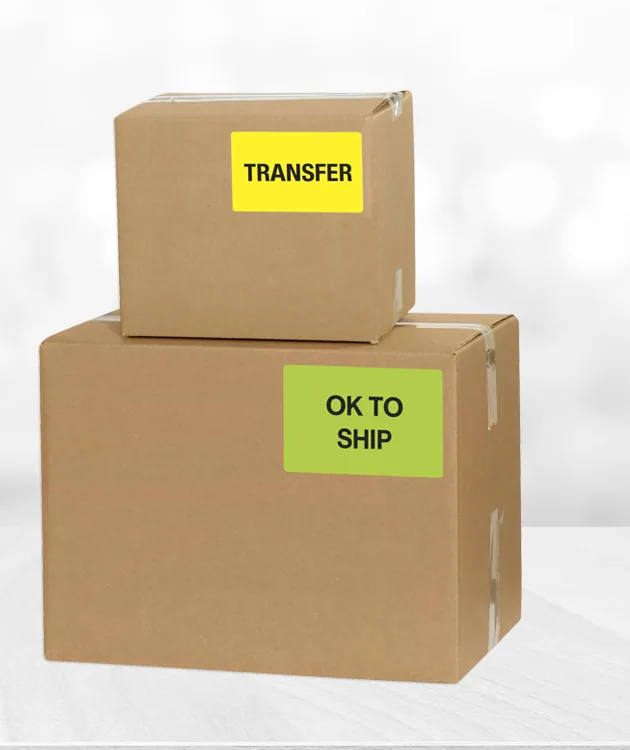
Removable labels are made for temporary coding: they peel off without residue, which matters on products and boxes that will be reused. Block-out labels go the other way: they cover old marks for good, so a reused box carries only the new information.
Write the code down. A color system that lives in one person's head breaks the day that person is off. A laminated card at each station that lists what each color means costs nothing and keeps the system honest.
In the catalog

Printing your own labels
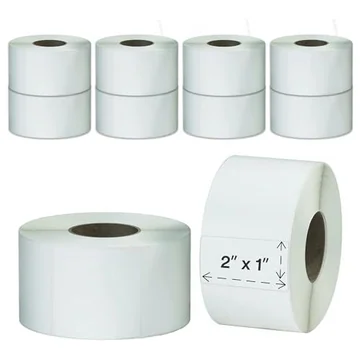
When a label needs an address, a product name or a barcode, it has to be printed. Two kinds of printer cover most needs. Office laser and inkjet printers print on sheets of labels. Thermal printers, common in shipping and warehouses, print on rolls or fanfold stacks.
The Tape Logic laser and inkjet labels come on letter-size sheets with layouts from 3 large shipping labels a sheet to 80 small return-address labels. The white labels work in both laser and inkjet printers. The clear, glossy and gold foil sheets are for laser printers. The thermal transfer labels are made for Zebra, Datamax, Sato and other thermal label printers.
Before printing a whole batch on a new sheet layout, print one page on plain paper and hold it against a label sheet up to the light. If the text lines up with the label edges, print on the labels. Most alignment problems come from page scaling, so set the printer to print at actual size rather than fit to page.
For a few labels a week, a laser or inkjet printer is enough. For hundreds of shipping labels a day, a thermal printer with roll labels is faster and costs less per label, and it needs no toner or ink.
| Line | Printer | Format | Models | From |
|---|---|---|---|---|
| Laser & Inkjet Labels | Laser and inkjet printers | Letter sheets, 3 to 80 labels each | 67 | $20.34 |
| Thermal Transfer Labels | Thermal transfer printers | Rolls and fanfold stacks | 3 | $89.82 |
| Blank & Removable Labels | Hand writing, no printer | Rolls of 250 to 5,000 | 18 | $12.05 |
In the catalog
A labeling kit for a small warehouse
A warehouse labeling kit grows from the questions people ask most often on the floor. Is this carton received? Is it on hold? Which pallet goes out first? Where does this aisle end? Each question has a label or a tape that answers it without anyone having to ask.
For receiving, keep Received and Inspected labels at the dock, with Hold and Quality Hold for anything that needs a second look. For storage, day or month labels mark rotation, and number labels mark bins, shelves and staging lanes. For shipping, Fragile, arrow and handling labels sit on the packing station, with packing list envelopes and shipping tags for items a label cannot reach. On the floor, yellow or black-and-yellow tape marks hazards and lane edges, and a second color marks storage areas.
Store each label where it is used, in a dispenser or on a hook, not in a central cupboard. A roll that takes two minutes to fetch is a roll that does not get used, and a status system with gaps is worse than none, because people stop trusting it.
Review the kit every few months. Labels nobody uses can go. A question that keeps being asked out loud is a sign that a label is missing. The point of every label and every strip of floor tape is the same: to let someone who has never seen the place make the right decision in a second.
Floor marking and the OSHA safety colors
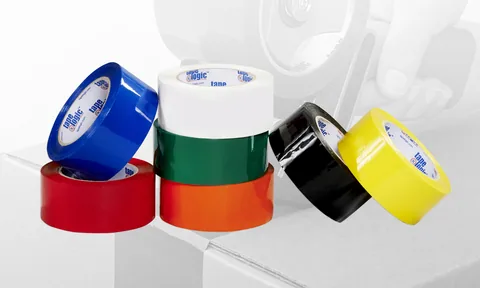
Floor tape is how a warehouse marks lanes, storage areas and hazards. OSHA's rules for handling materials say that permanent aisles and passageways shall be appropriately marked, and vinyl floor tape is the usual way to do it on concrete and smooth floors.
OSHA also sets the basic safety color code. Red is the basic color for fire protection equipment and for danger. Yellow is the basic color for caution and for marking physical hazards such as striking against, stumbling, falling, tripping and getting caught in between. The Tape Logic tape follows the same idea and adds black and yellow stripes for physical hazards, green for first aid and safety equipment and orange for hazards and biohazards.
“Yellow shall be the basic color for designating caution and for marking physical hazards such as: Striking against, stumbling, falling, tripping, and “caught in between.””
The Tape Logic vinyl safety tape is made for this work. Solid colors are 6 mil and striped tape 7 mil, every roll 36 yards long in 1 to 4 inch widths, and the vinyl resists oil, grease, moisture, solvents and scuffs. White, black, blue and the black-and-white stripes are left for lanes, borders and storage areas you define yourself.
Lay floor tape on a clean, dry floor. Sweep, wipe and let it dry, then snap a chalk line so the tape runs straight. Unroll the tape onto the line without stretching it, because stretched vinyl shrinks back and lifts at the ends. Press the whole length down firmly. Heavy forklift traffic wears any tape over time, so check the busiest crossings regularly and replace worn sections before they peel.
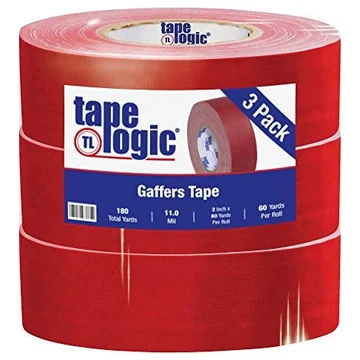
On carpet or wood, or for an event that ends tomorrow, gaffers tape is the better choice. It is 11 mil cloth, holds cables and marks floors for the day, and comes off without leaving residue.
| Color | Common use | Thickness | Widths | Models |
|---|---|---|---|---|
| Black/Yellow | Caution, physical hazards | 7 mil | 1", 2", 3", 4" | 5 |
| Green | First aid, safety equipment | 6 mil | 1", 2", 4" | 4 |
| Black | Lanes and general marking | 6 mil | 1", 2" | 3 |
| Yellow | Caution, physical hazards | 6 mil | 3" | 2 |
| Red | Danger, fire protection | 6 mil | 3", 4" | 2 |
| Black/White | Lanes and general marking | 7 mil | 3" | 2 |
| Blue | Lanes and general marking | 6 mil | 2" | 1 |
| White | Lanes and general marking | 6 mil | 2" | 1 |
| Orange | Hazards, biohazards | 6 mil | 2" | 1 |
| Red/White | Danger, fire protection | 7 mil | 3" | 1 |
In the catalog

Tags for things a label will not stick to
Some items have no flat, clean surface for a label: coils of wire, bundles of pipe, bags, tools, oily parts. Tags solve that. A tag ties on with wire or string and carries the same information a label would.
The Tape Logic shipping tags are 13 point card stock with a 3/16 inch hole, pre-wired with 12 inch wire or pre-strung with 12 inch string, in manila and fluorescent green, red, dark blue and green. Sizes run from 2 3/4 x 1 3/8 to 6 1/4 x 3 1/8 inches, 1,000 to a box. Inspection tags, printed for status such as Rejected, bring the hold-and-pass system to items that cannot be labeled.
Write on tags with a permanent marker before tying them on, and tie them where they will not be crushed or torn off in handling.
In the catalog

Paperwork that rides outside the box
Packing slips, invoices and shipping documents need to travel with a carton without being sealed inside it. Packing list envelopes do that job. They stick to the outside of the box with an adhesive backing, and the clear poly front lets the paperwork be read or pulled without opening the parcel.
The Tape Logic envelopes are 2 mil poly with a hot melt adhesive backing that grips paper and corrugated surfaces. Some are printed Packing List Enclosed, Invoice Enclosed, Important Papers or Safety Data Sheet, others are clear-faced, and there are bilingual versions. Most come 1,000 to a case.
Put the envelope on the same face as the shipping label but not over it, so the documents are found quickly at the receiving dock.
Questions
Where should a Fragile label go?
Put fragile labels on at least 2 faces of the box, the top and one side, clear of the shipping label, so a handler sees one whichever way the box is turned.
What color tape marks a physical hazard on a warehouse floor?
Yellow, or black and yellow stripes. OSHA 1910.144 names yellow as the basic color for caution and for marking physical hazards such as tripping and falling.
How many labels are on a Tape Logic roll?
Most handling and inventory labels come 500 to a roll. The 8 x 10 inch labels come 250 to a roll.
Which label dispenser fits Tape Logic labels?
The label notes name tabletop dispensers SL9506, SL9512 and SL9518 and wall-mount dispensers LDM250 to LDM1250. The Tape Logic label dispensers hold rolls up to 7 inches across.
Sources
- OSHA, 29 CFR 1910.144, Safety color code for marking physical hazards, read October 23, 2026
- OSHA, 29 CFR 1910.176, Handling materials, general, read October 23, 2026
- U.S. Postal Service, How to Send a Package, read October 23, 2026